
Payal Tandon
Co-Founder & Chief Product Officer, PRiSM Learning
“We don't believe in tricks. For twenty years we've taught from first principles — reading what a problem actually asks, finding where the logic breaks, reasoning to the answer on test day.”
About Payal
Payal co-founded e-GMAT, the world's most-watched GMAT prep platform, and now leads product at PRiSM Learning. Over 18 years she has built the teaching practice used by more than 200,000 students across 50+ countries, and has personally coached over 2,500 of them to a 700+ GMAT score.
A perfectionist by her own account — “if you take on a task, give it your 200%” is what she tells her students and her team — she was the absolute topper of the Haryana State Board Class 12 examination, sat by more than a million students. At e-GMAT she owned curriculum development and expert training, and built the closed-loop, first-principles pedagogy PRiSM is built on.
With PRiSM she has rebuilt that methodology for the Digital SAT. Her writing here is about the part of the test most prep skips: reading what a question actually asks, finding the exact step where the logic breaks, and reasoning to the answer instead of recognising a pattern.
Articles by Payal Tandon
16 articles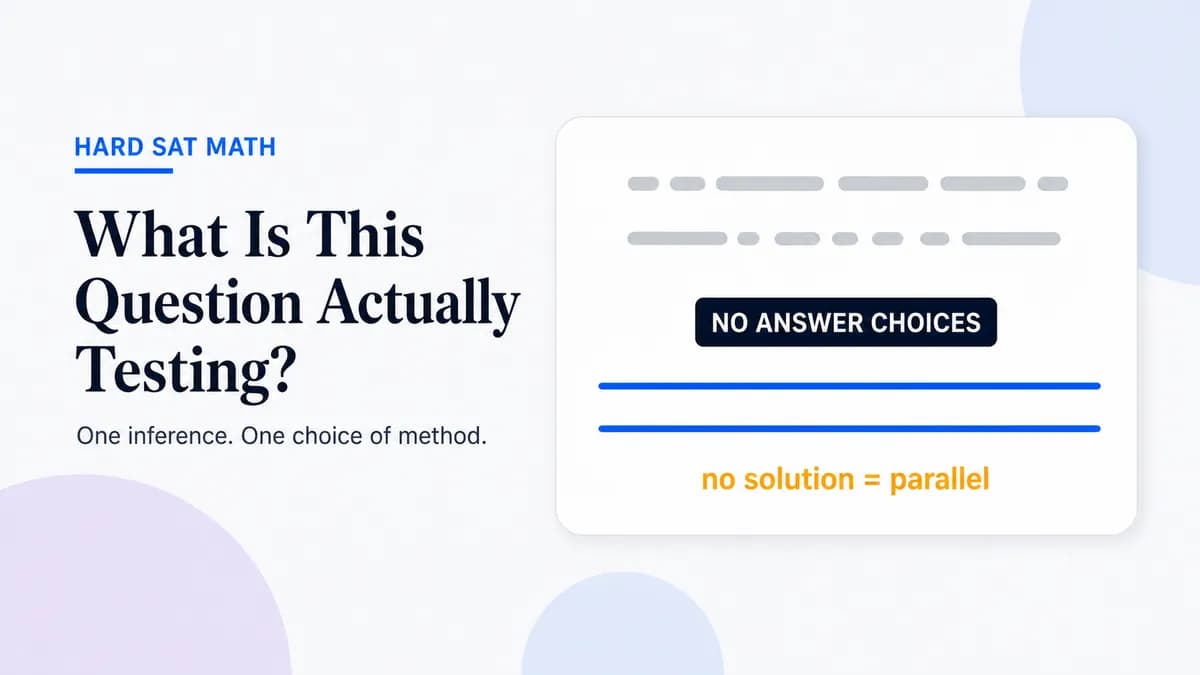
What Is This Question Actually Testing? #1 — The System With No Solution
“No solution” means parallel lines — that one inference is the whole question. The 90-second coefficient method, why Desmos struggles here, and the drill.
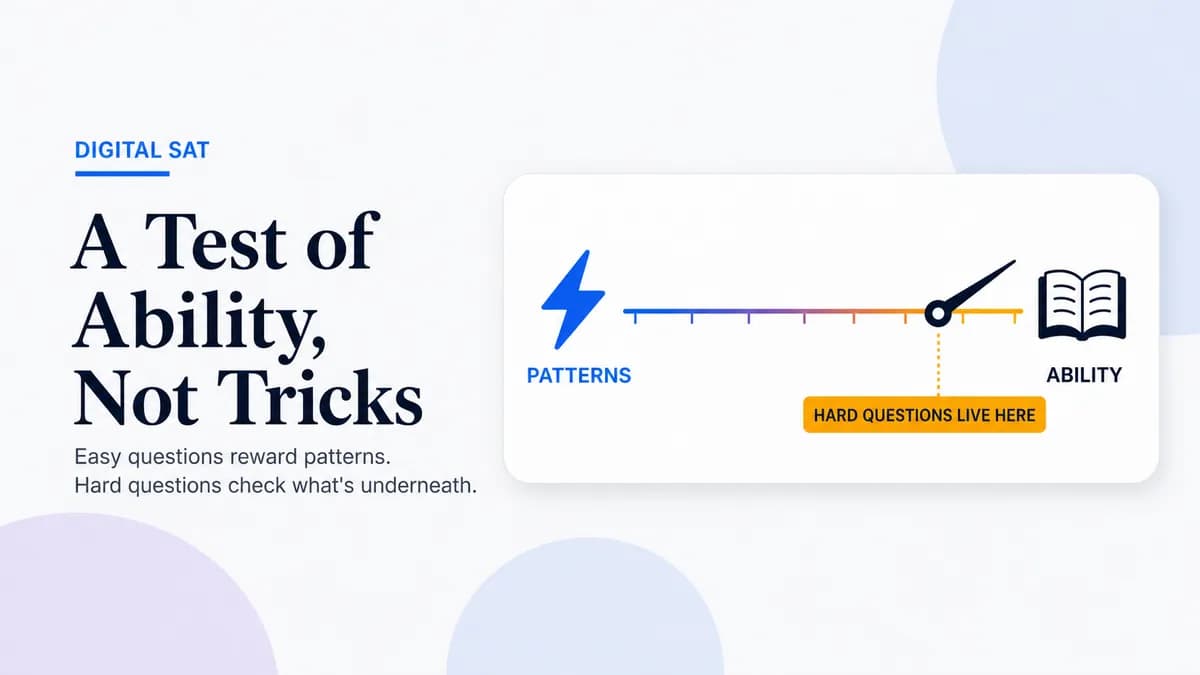
The SAT Is a Test of Ability — Not a Test of Tricks (And I Can Prove It)
Analysis of 2,845 real SAT questions shows tricks work on easy questions and fail on hard ones by design. What the SAT actually measures — and how to train it.
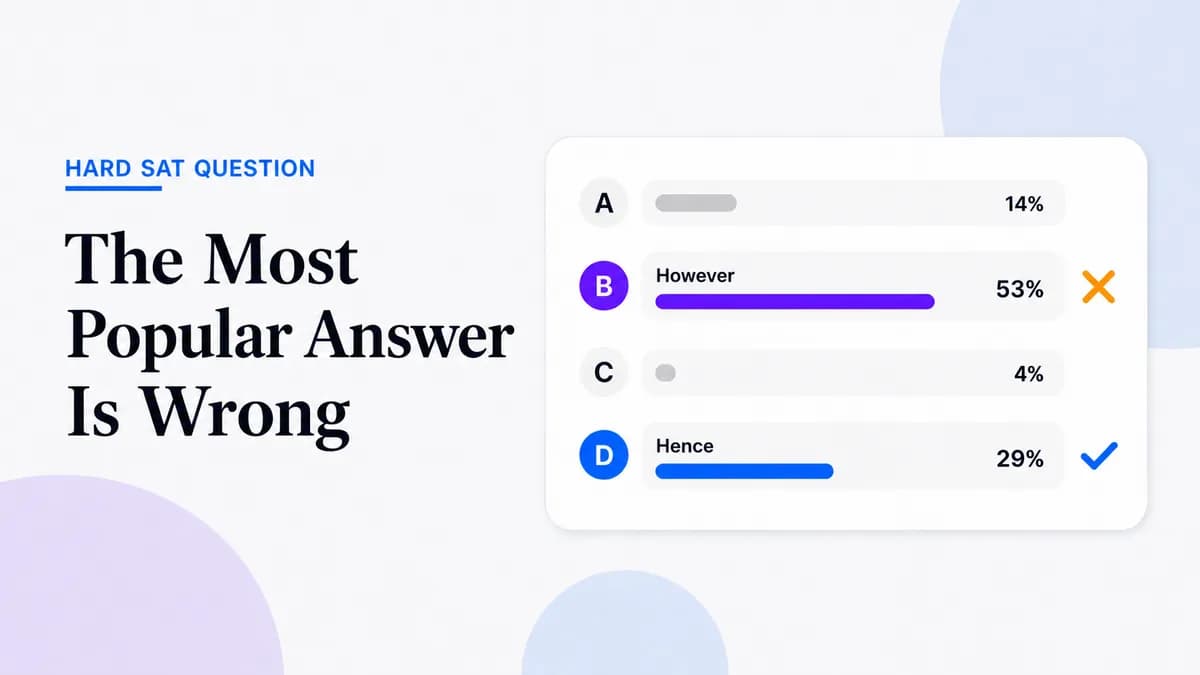
The Most Popular Answer Is Wrong: Inside a Hard SAT Transition Question
On this hard SAT transition question, 53% pick “However” — and it’s wrong. See why careful students miss it, and the 3-step drill that fixes it.
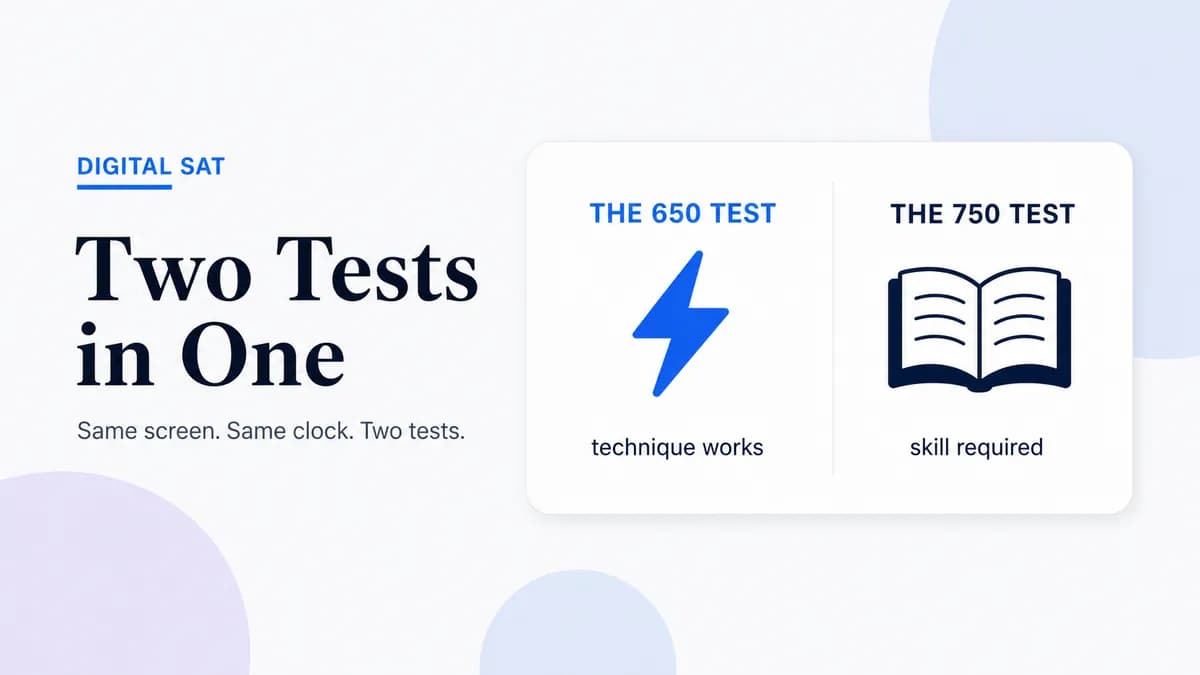
The SAT Is Two Tests in One: The One That Gets You to 650, and the One That Takes You to 750
The SAT that takes you to 650 isn’t the SAT that takes you to 750. Analysis of 2,845 real questions shows where the switch happens — and how to prep.
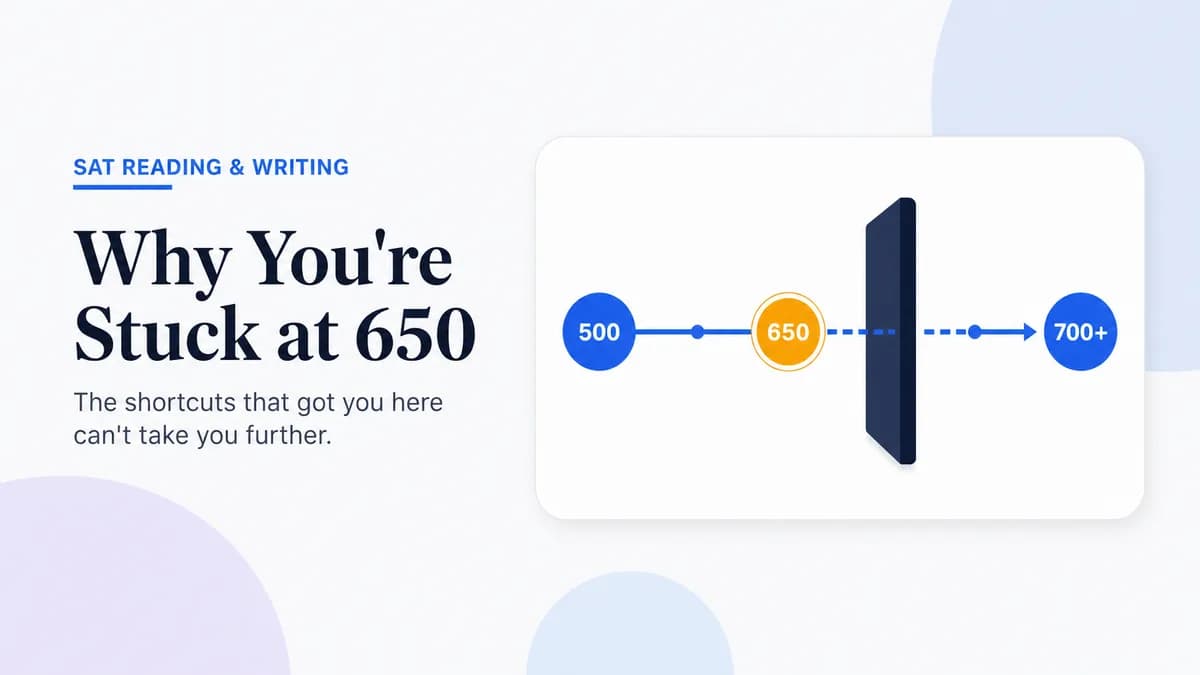
Why You’re Stuck at 650 on SAT Reading & Writing (It’s Not Intelligence, Effort, or Vocabulary)
Stuck at 650 on SAT Reading & Writing? Our analysis of 2,845 real SAT questions shows why shortcuts stall there — and the one skill that breaks 700.
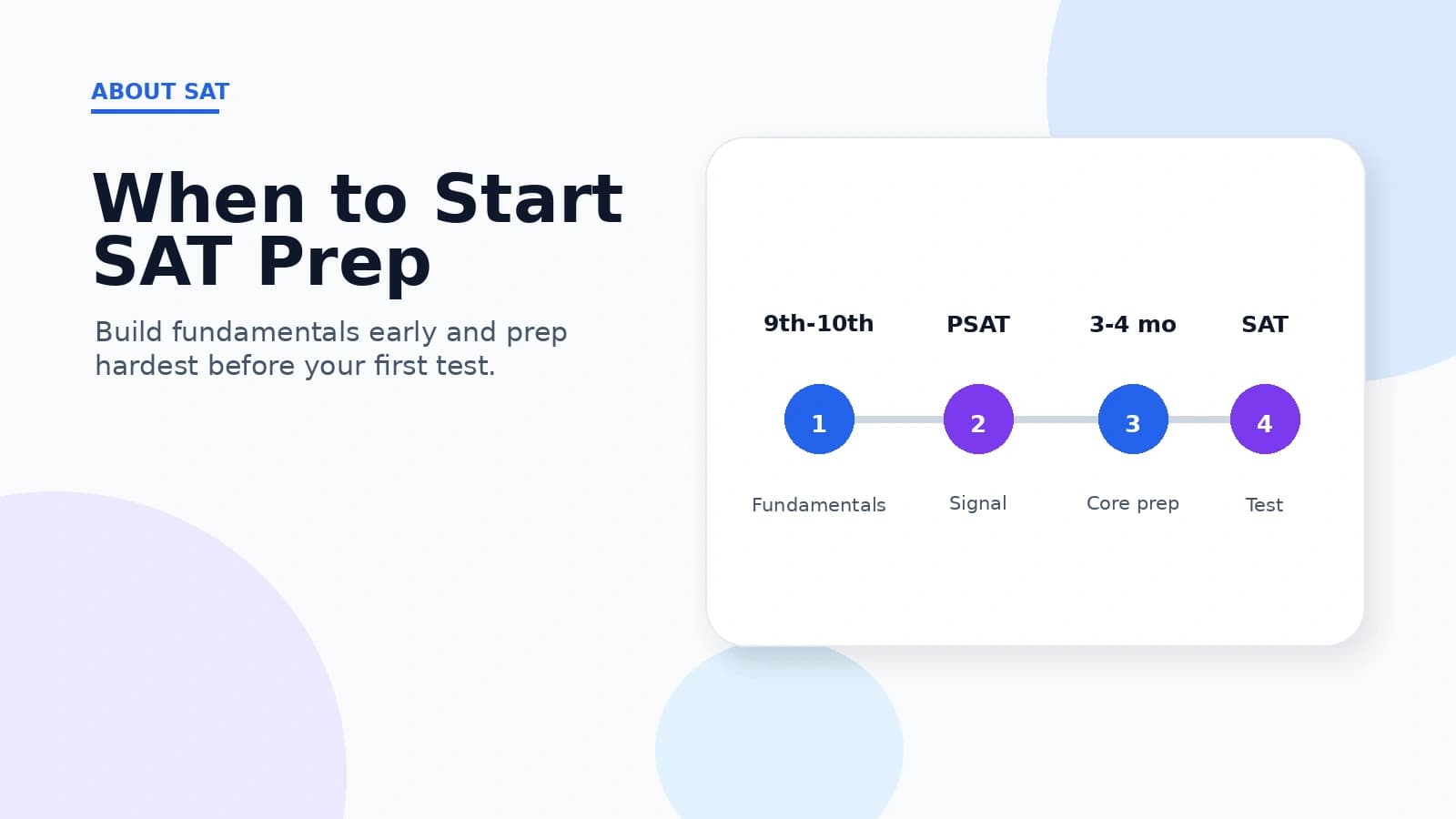
When to Start SAT Prep: Timing, Test Dates, and a Sample Plan
A practical guide to when to start SAT prep: the three-to-four-month rule, an ideal timeline by grade, how many months you need, and how to line it up with test dates.
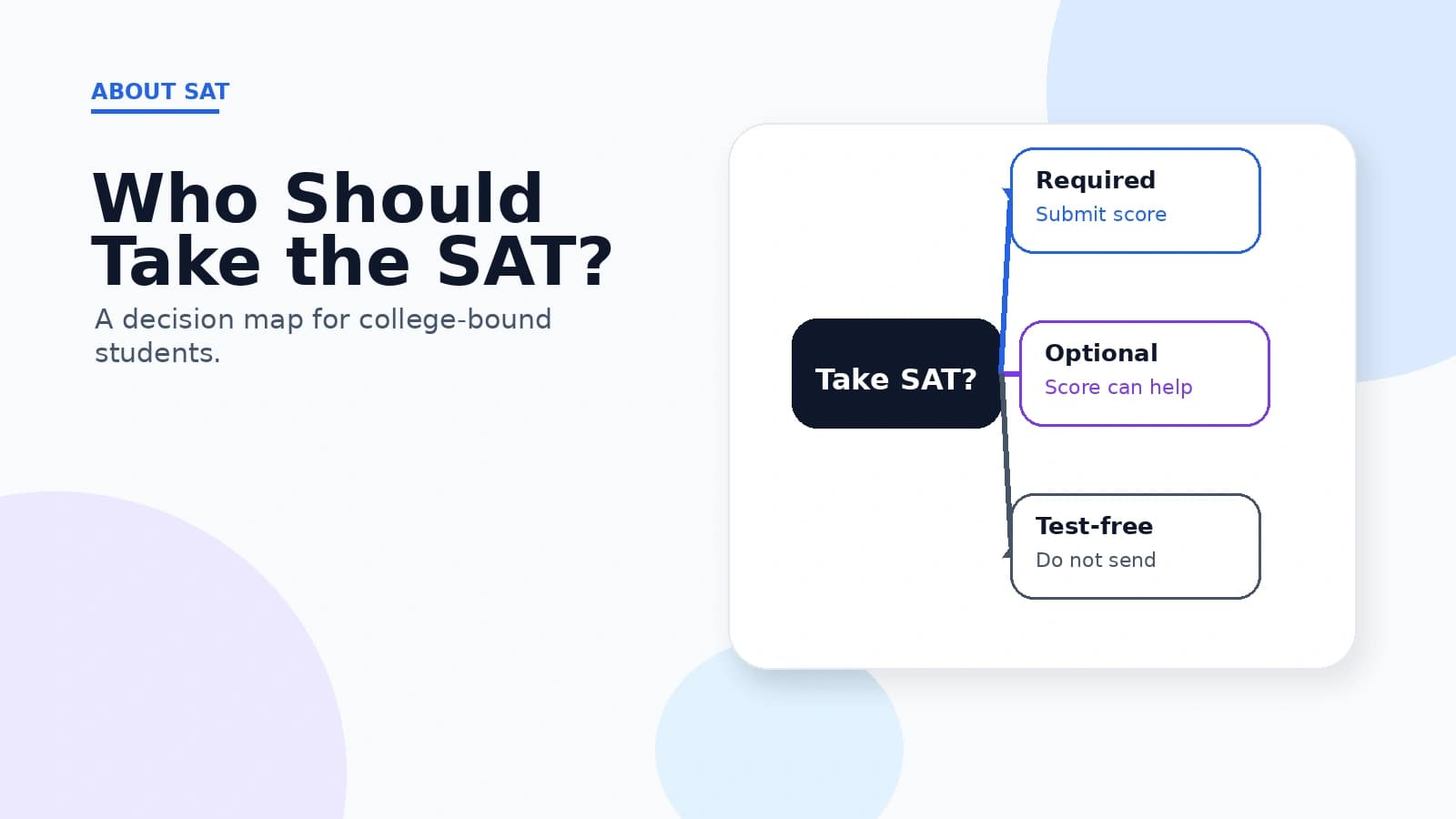
Who Should Take the SAT? Test-Optional Rules and Who Still Needs Scores
A clear answer to who should take the SAT in 2026-2027: which selective colleges require scores again, why scores still help at test-optional schools, and who can skip it.
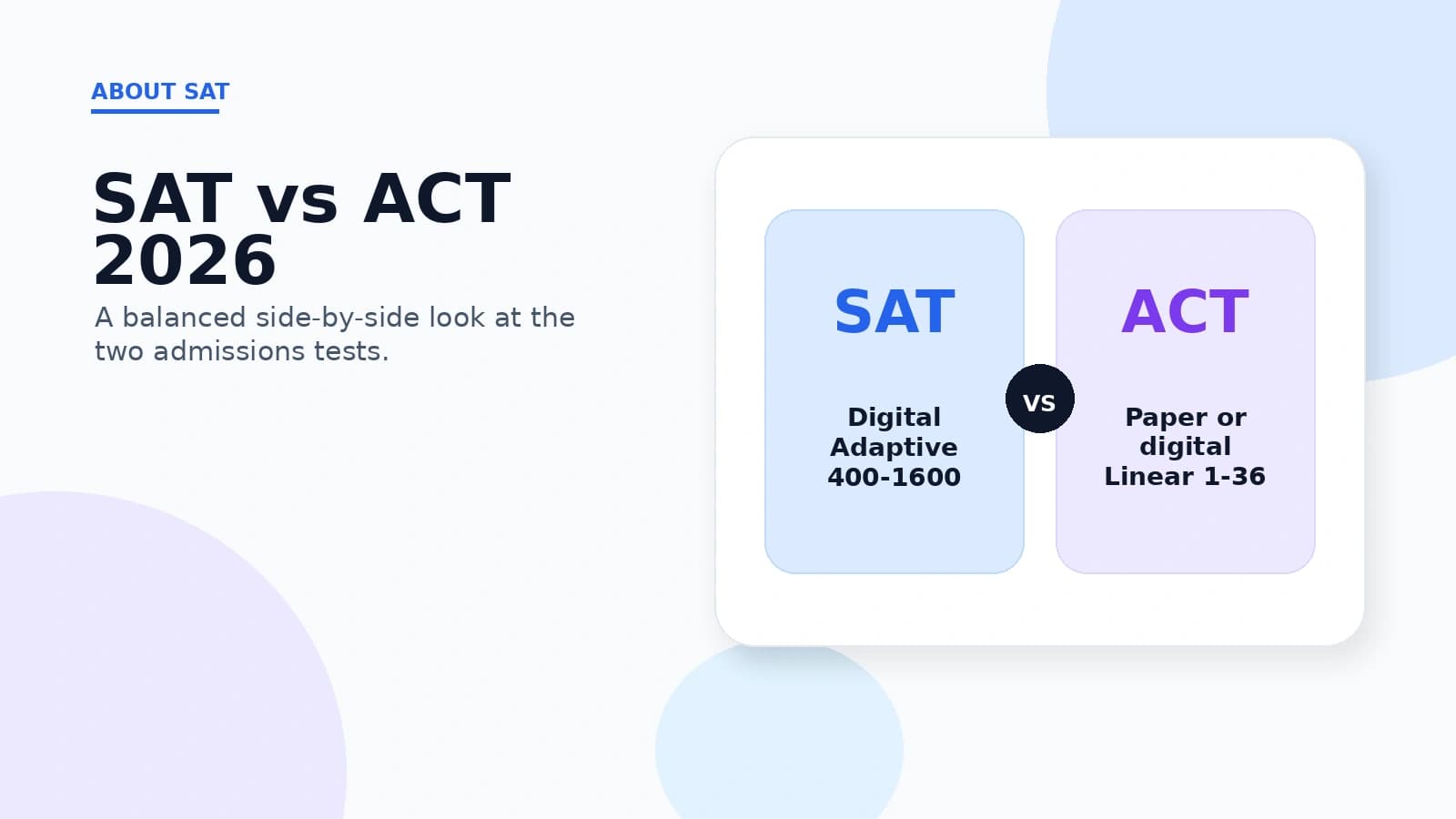
SAT vs ACT in 2026: Key Differences and How to Choose
A current, side-by-side comparison of the Digital SAT and the Enhanced ACT: format, length, scoring, the optional Science section, and how to pick the right test.
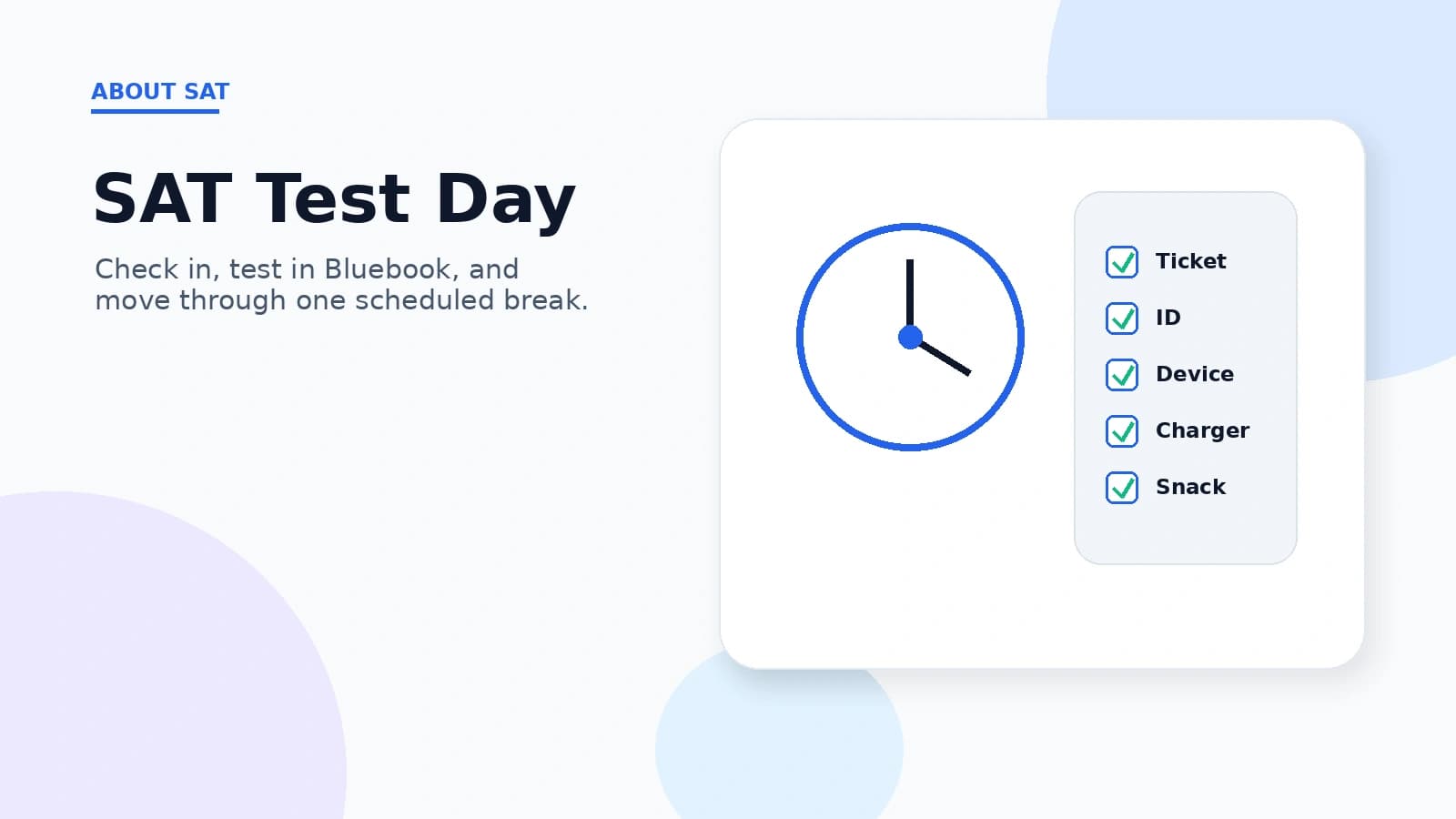
SAT Test Day: What to Bring, What to Expect, and How to Prepare
A complete walkthrough of SAT test day: the check-in routine, what to bring and leave home, using the Bluebook app, a sample timeline, and the night before.
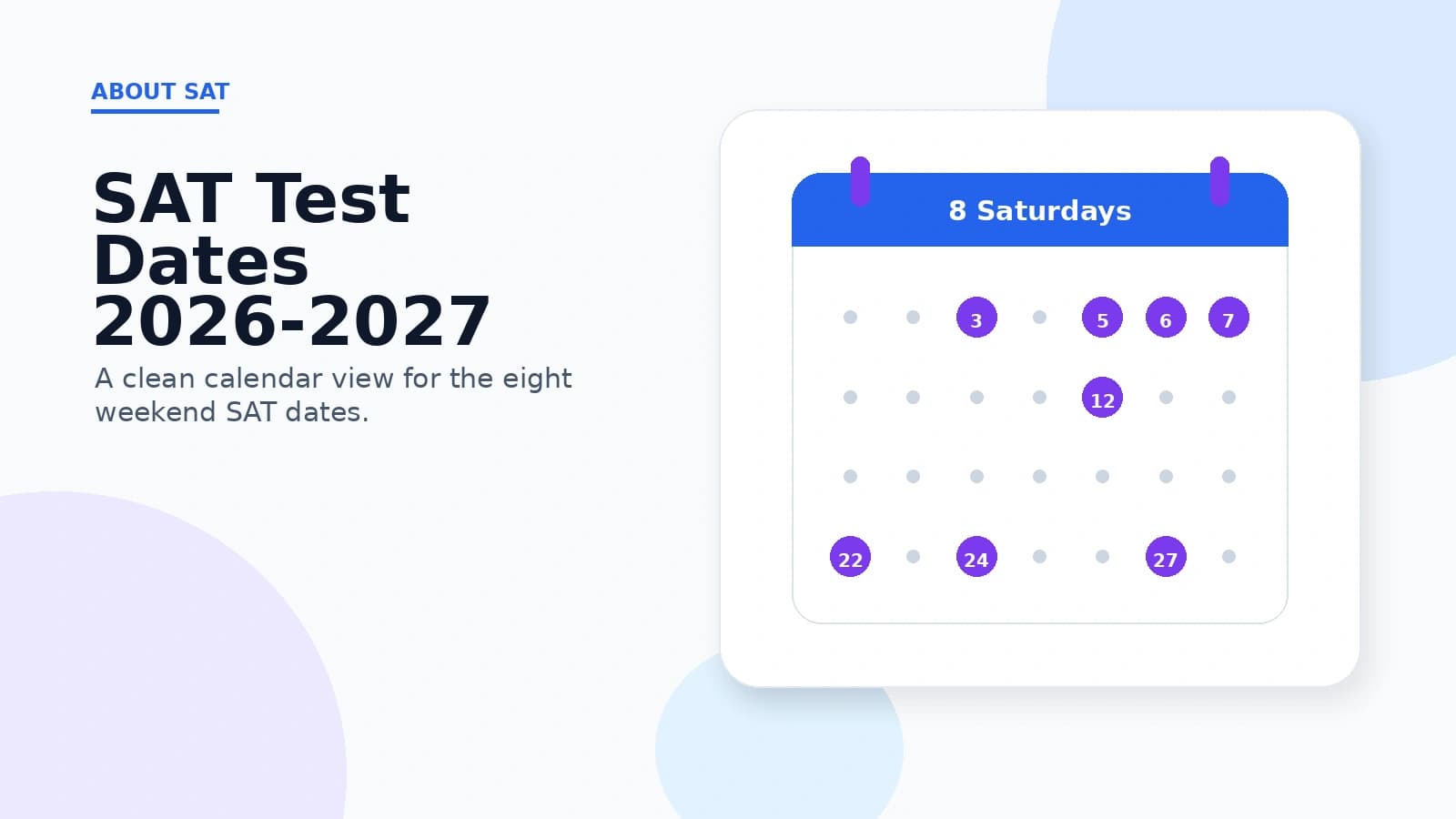
SAT Test Dates 2026-2027: Full Schedule, Deadlines, and Score Releases
Every SAT test date for the 2026-2027 year, with regular registration deadlines, fall score-release dates, and how to choose the date that leaves room for a retake.
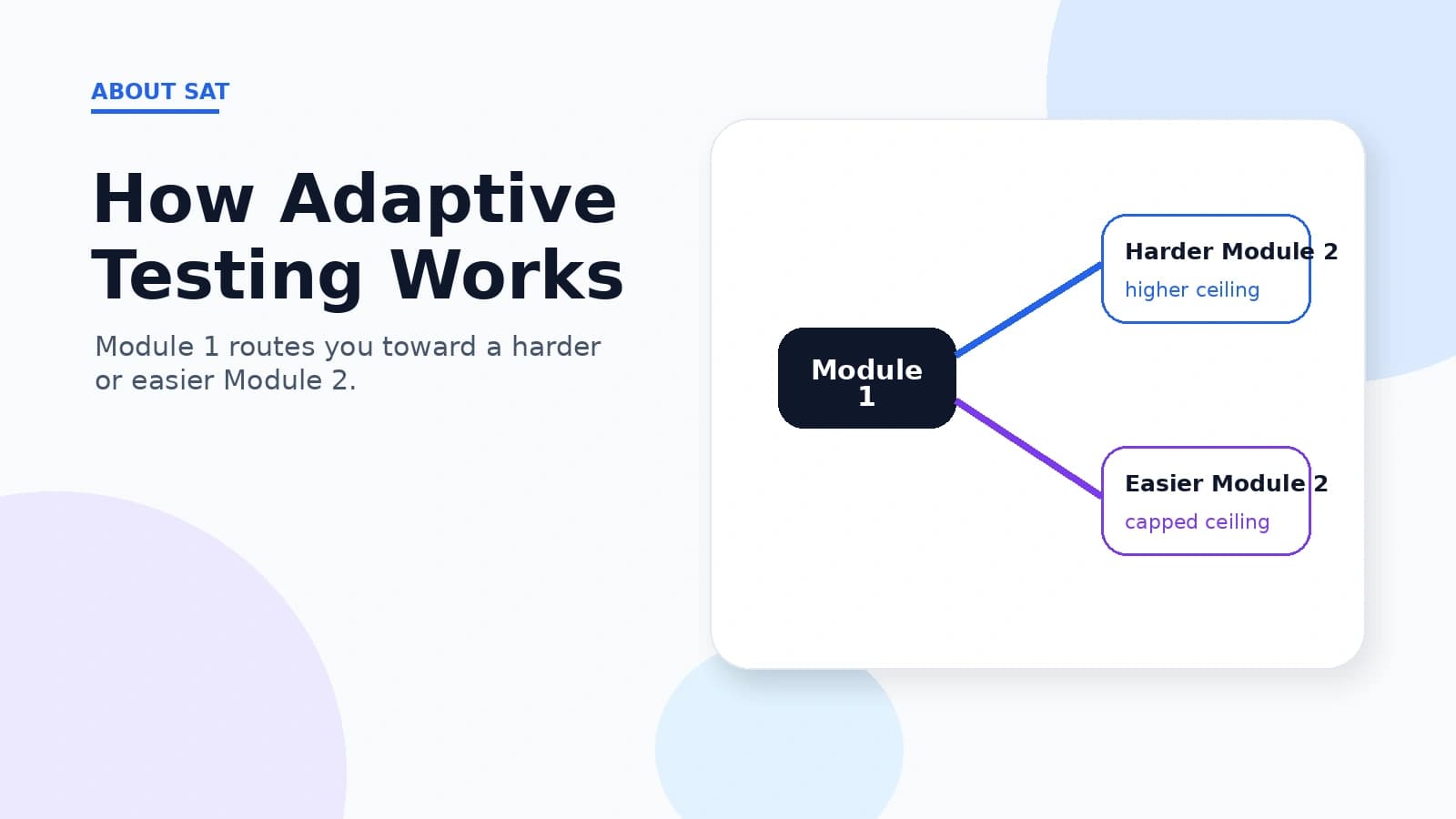
How Digital SAT Adaptive Testing Works (and Why Module 1 Matters)
Digital SAT adaptive testing adjusts difficulty by section, not by question. Here is how the two modules route you, why Module 1 sets your ceiling, and how to prepare for it.
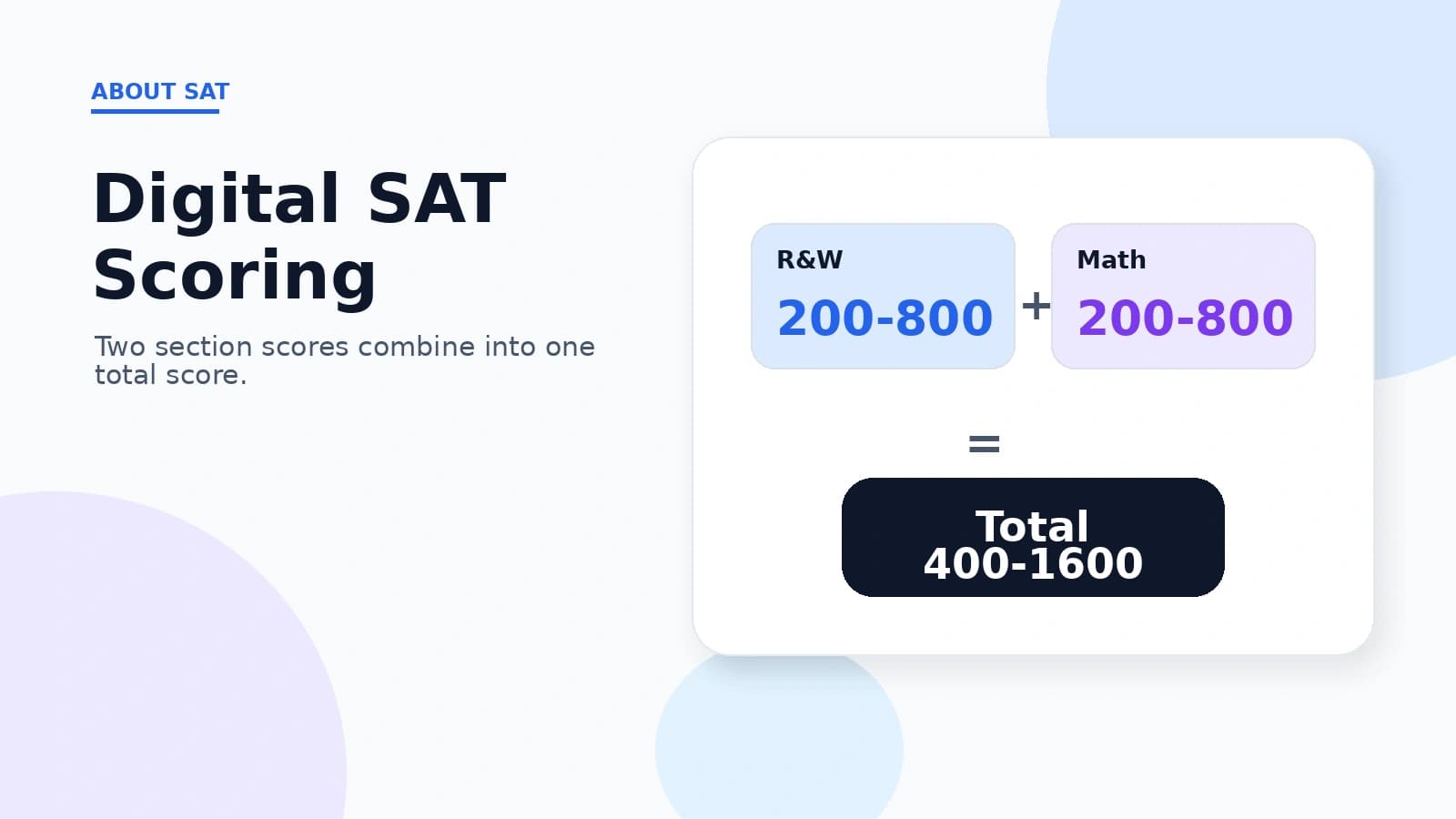
Digital SAT Scoring Explained: How Your 400 to 1600 Is Calculated
How Digital SAT scoring works: the 400 to 1600 scale, two 200 to 800 sections, raw-to-scaled equating, why the adaptive design shapes your ceiling, and when scores arrive.
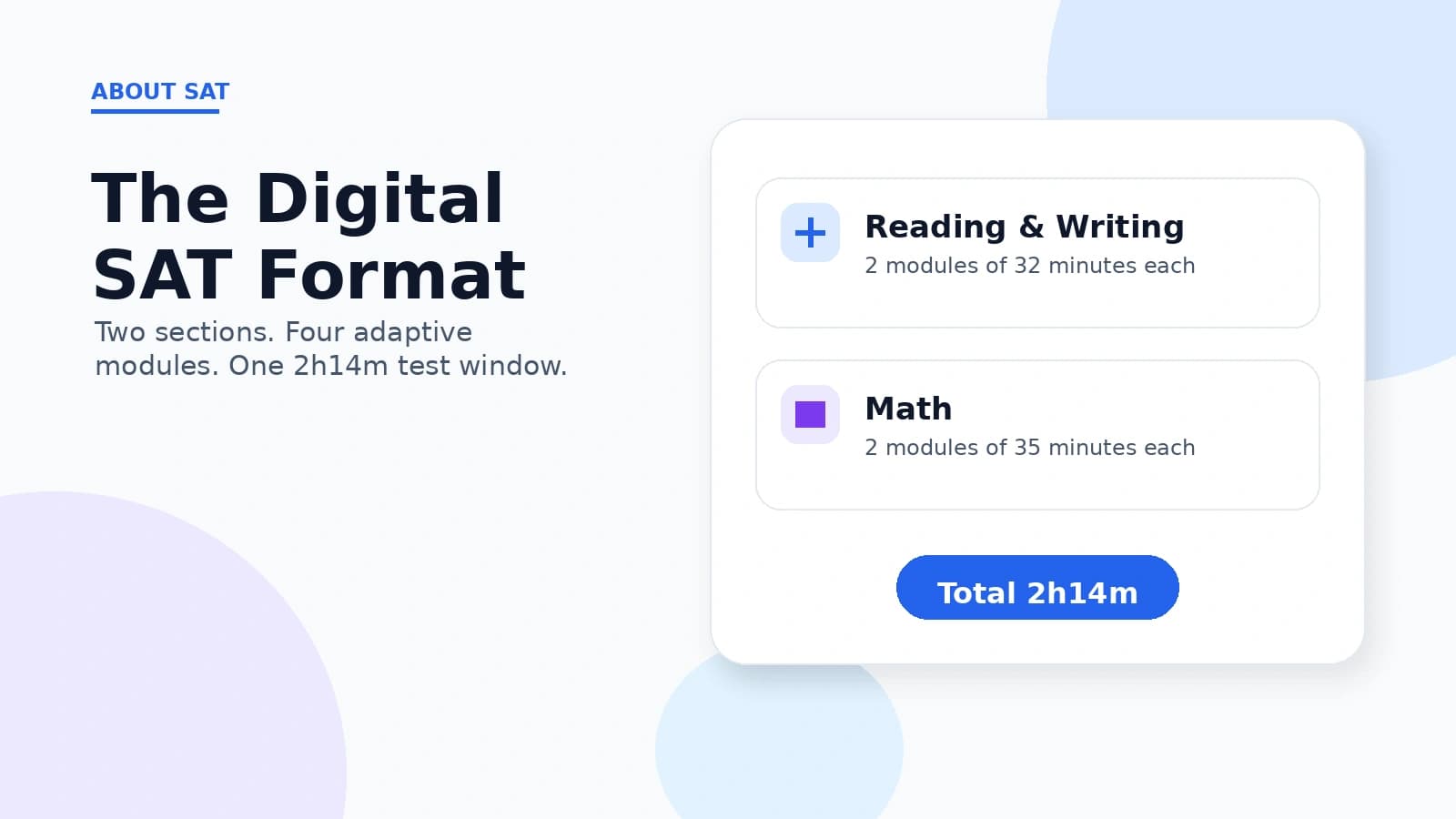
The Digital SAT Format: Sections, Timing, and Question Types in 2026
A plain-English guide to the Digital SAT format: two sections, four adaptive modules, 98 questions in 2 hours 14 minutes, the question types, and the on-screen tools.
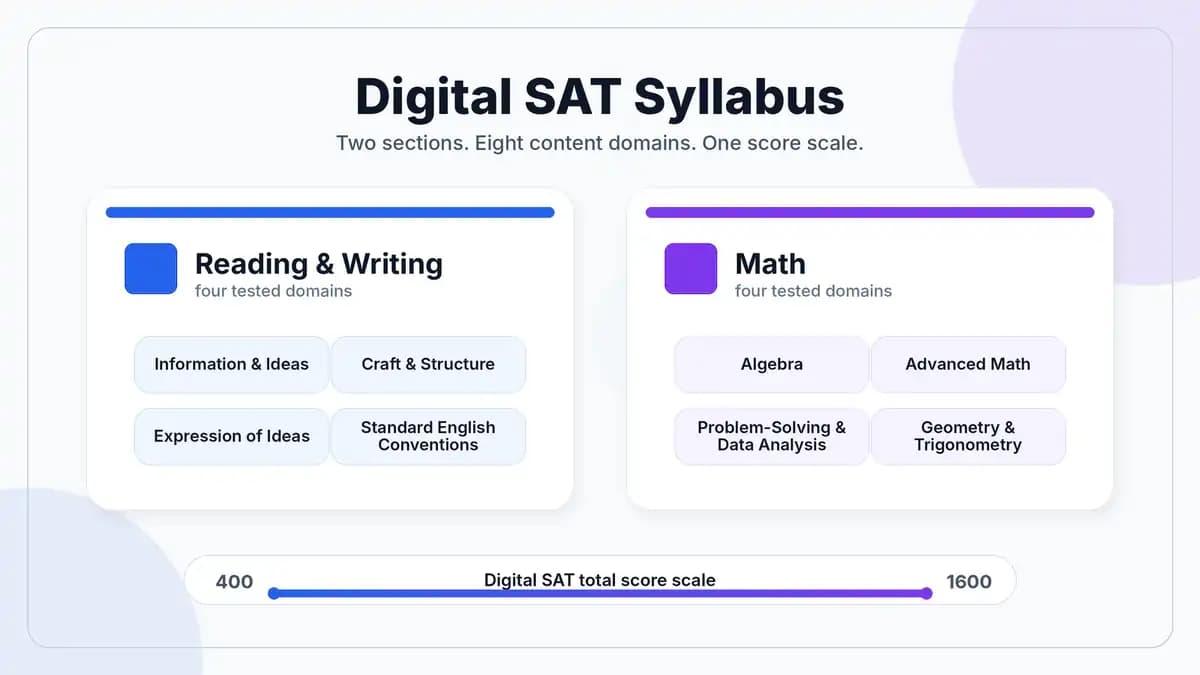
The Complete Digital SAT Syllabus: Every Topic Tested in 2026
A clear, domain-by-domain breakdown of the Digital SAT syllabus: the eight content areas across Reading, Writing, and Math, how each is weighted, and how scoring works.

Bouncing Back After a Low SAT Score
You opened your score report, saw the number, and your stomach dropped. Maybe it was a hundred points below your practice tests. Maybe it was below the average for the schools on your list. Maybe it was just lower than you wanted, and the gap between expectation and reality felt physical. First, the part nobody […]

How to Register for the SAT: Steps, Fees, and Deadlines in 2026
A step-by-step walkthrough to register for the SAT online: creating your account, picking a date and center, the full 2026 fee structure, fee waivers, and deadlines.
Biography, role and credentials on this page are drawn from LinkedIn and GMAT Club reviews, and from PRiSM Learning’s own published record. Ratings and review counts were last checked on 2 September 2026.