Digital SAT Scoring Explained: How Your 400 to 1600 Is Calculated
How Digital SAT scoring works: the 400 to 1600 scale, two 200 to 800 sections, raw-to-scaled equating, why the adaptive design shapes your ceiling, and when scores arrive.

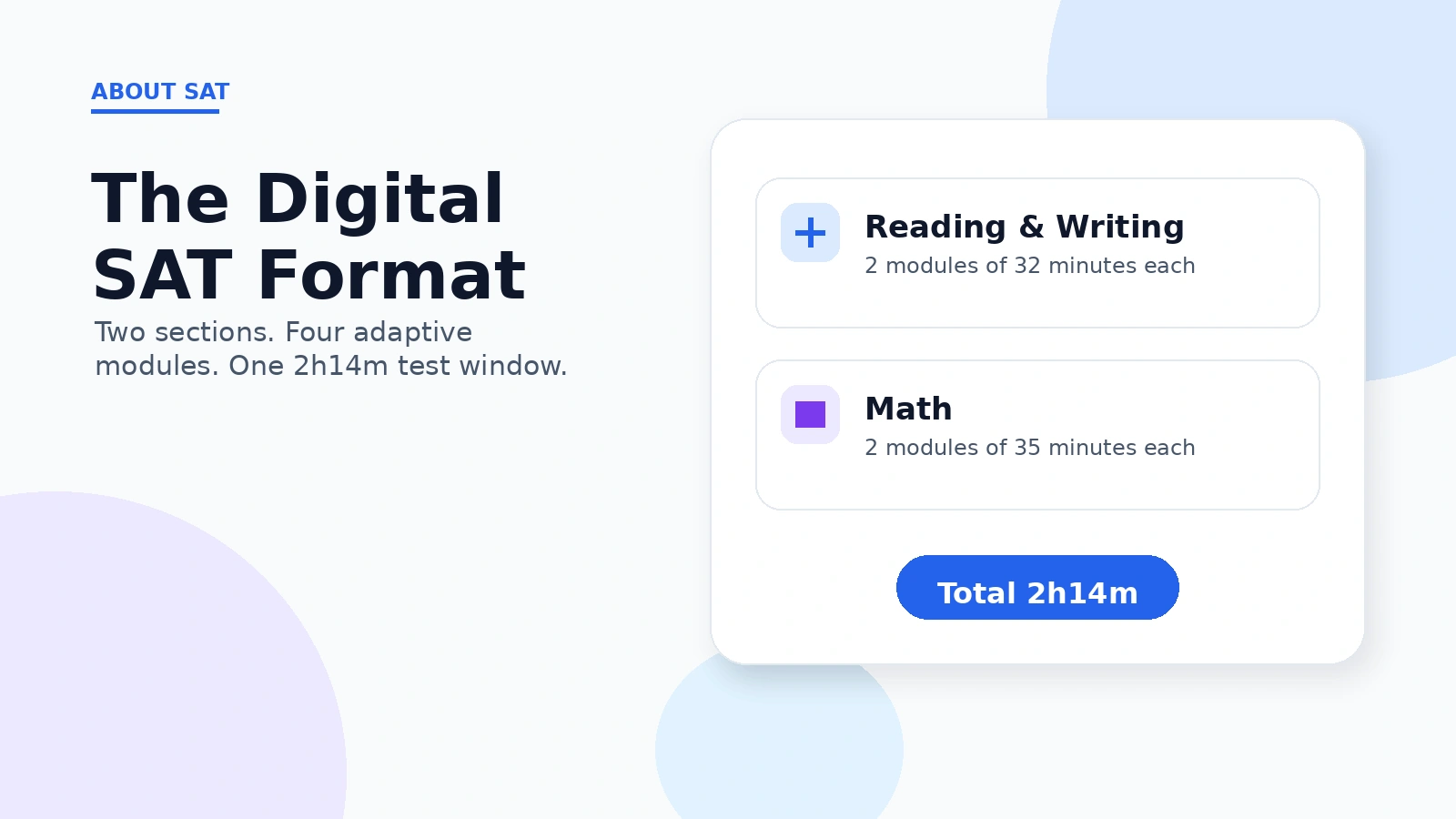
Digital SAT scoring works on a 400 to 1600 scale, built from two section scores of 200 to 800 each: one for Reading and Writing and one for Math. Your raw answers are converted to scaled scores through a process called equating, and because the test is adaptive, the difficulty you unlock also shapes your ceiling. Here is how it all fits together.
How Digital SAT scoring works
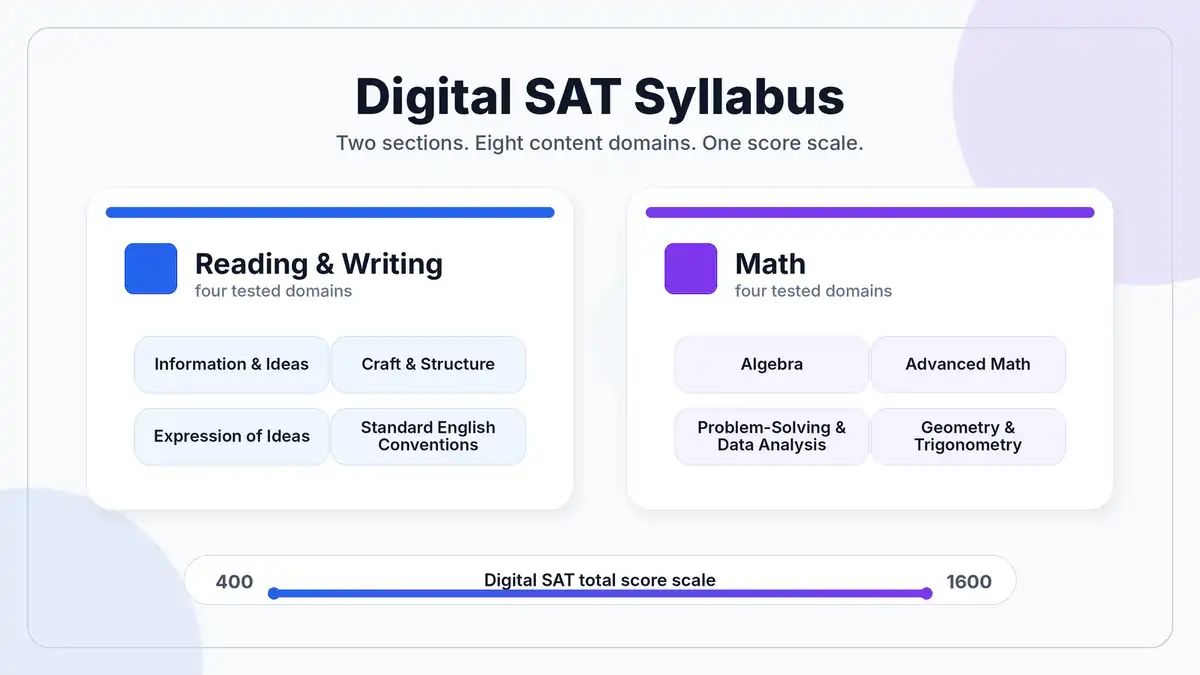
Your total score is simply the sum of your two section scores. Reading and Writing is scored from 200 to 800, Math is scored from 200 to 800, and together they produce a total from 400 to 1600. There is no separate essay or combined sub-score to worry about on the current test.
Scores are reported in 10-point intervals, so a 690 or a 700 is possible, but a 691 is not. There is also no penalty for a wrong answer, so every question you answer correctly can only help you.
From raw score to scaled score
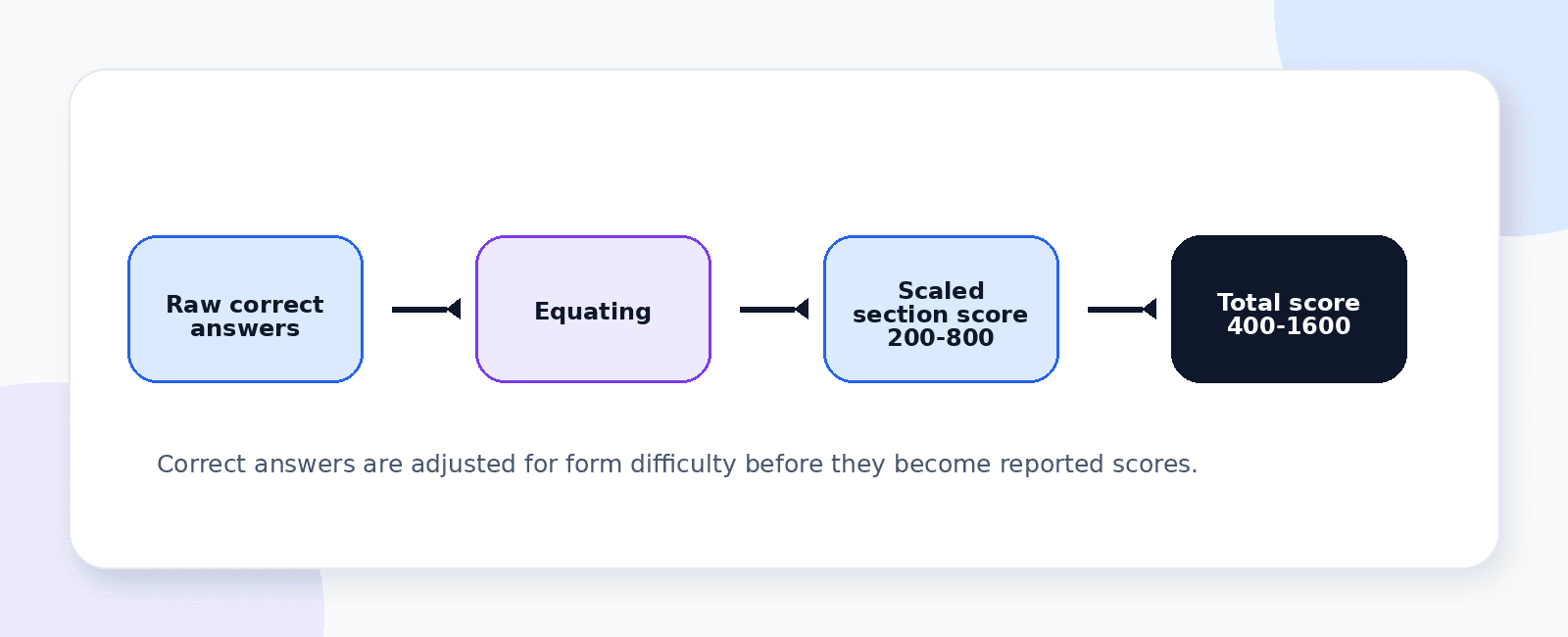
Your raw score is the number of questions you answered correctly. The College Board then converts that raw score into the 200 to 800 scaled score for each section using a statistical process called equating, which adjusts for small differences in difficulty between test forms.
Equating is why a given scaled score means the same thing on any test date. A 700 earned on a slightly harder form represents the same ability as a 700 earned on a slightly easier form, so you are never penalized or rewarded for which form you happened to sit.
Why the adaptive design affects your score
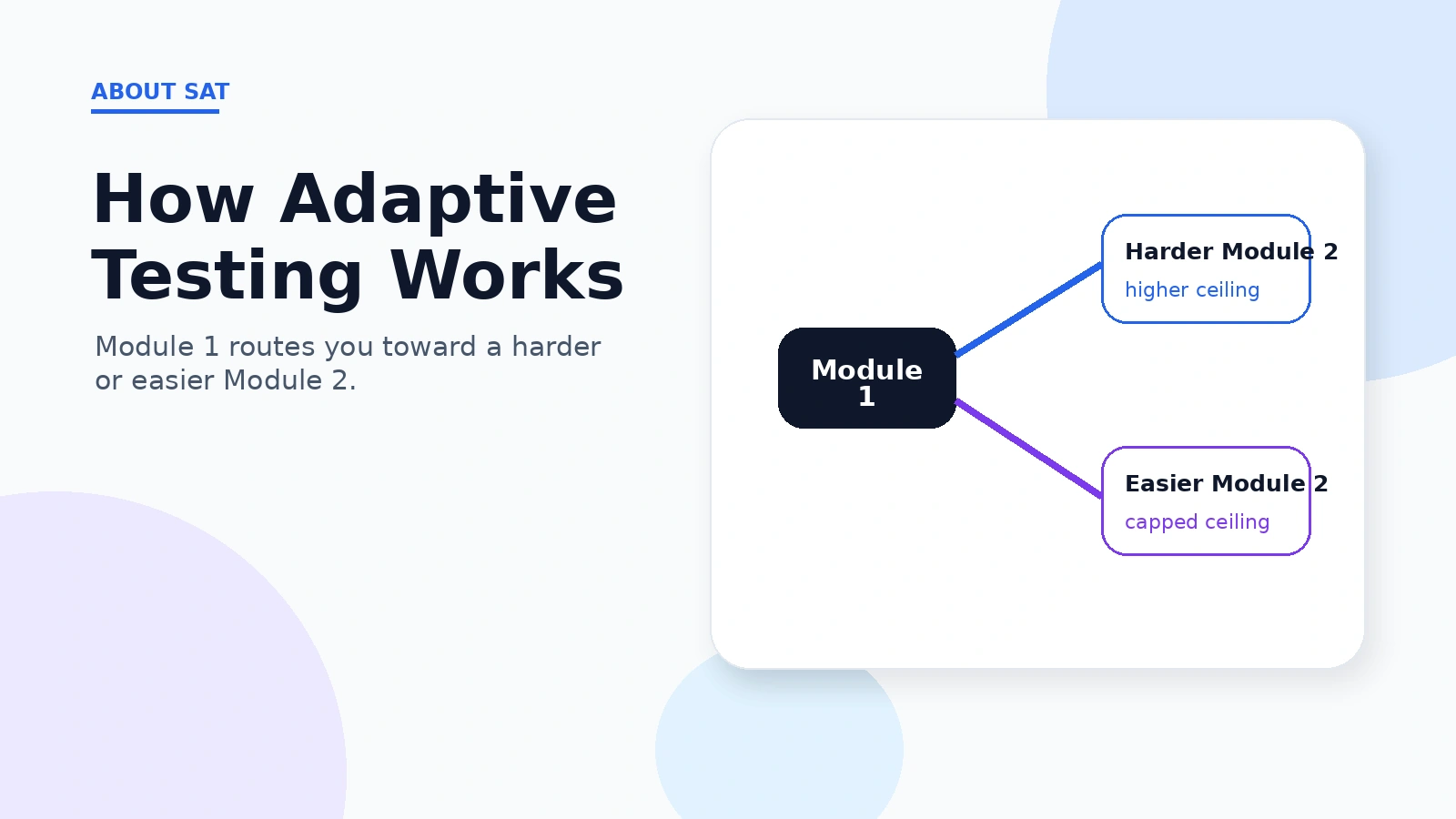
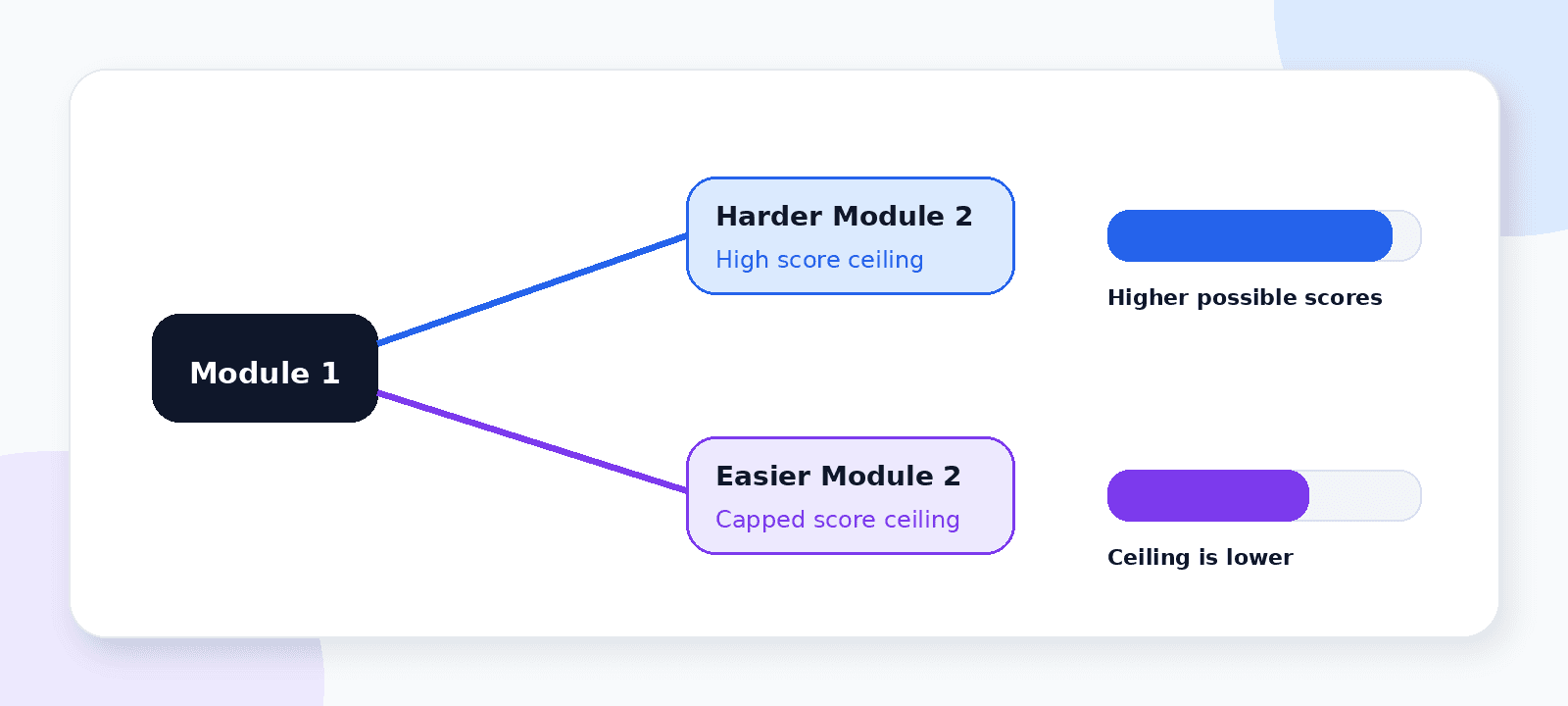
Digital SAT scoring is tied to the test's adaptive structure. Each section has two modules; your performance on Module 1 routes you into a harder or an easier Module 2. The harder Module 2 carries access to the highest scores in that section, while the easier Module 2 caps how high you can go.
This means raw correct answers are not the whole story. Two students who answer the same number of questions correctly can earn different section scores if one was routed into the harder module and the other was not. For the full mechanic, see how Digital SAT adaptive testing works.
| Element | How it scores |
|---|---|
| Reading and Writing section | 200 to 800 |
| Math section | 200 to 800 |
| Total score | 400 to 1600 (sum of both) |
| Reporting interval | 10-point steps |
| Wrong answers | No penalty |
When you get your scores
Digital scores are typically released within about two weeks of your test date, much faster than the three to five weeks the old paper test required. You access them through your College Board account, which also shows a domain-level breakdown of your performance.
That domain breakdown is the most useful part of the report for planning a retake, because it shows exactly which content areas cost you points. To see those domains, read the Digital SAT syllabus.
What counts as a good score
A "good" Digital SAT score depends entirely on the colleges you are targeting, since each school reports its own admitted-student range. Rather than chasing a single universal number, compare your score to the middle 50% range published by your target schools.
Many colleges also superscore, combining your highest Reading and Writing score and your highest Math score across multiple test dates. That can change how you plan a retake, because you only need to raise one section at a time.
Frequently asked questions about Digital SAT scoring
Q: What is the Digital SAT score range? A: The total ranges from 400 to 1600, made up of two section scores from 200 to 800 each (Reading and Writing, and Math). Scores are reported in 10-point intervals.
Q: Is there a penalty for wrong answers? A: No. Only correct answers count toward your raw score, so you should answer every question rather than leaving any blank.
Q: How does adaptive testing change my score? A: Performing well on the first module of a section routes you into a harder second module, which unlocks the highest scores. An easier second module limits your ceiling for that section.
Q: How soon do Digital SAT scores come out? A: Usually within about two weeks of the test date, viewable in your College Board account along with a domain-by-domain breakdown.
Q: Does the SAT still have an essay? A: No. The current Digital SAT has no essay; your score is built only from the Reading and Writing and Math sections.
Put this into practice with PRiSM Learning: PRiSM's full-length mocks with score prediction and the PRiSM SAT score guarantee.