How Digital SAT Adaptive Testing Works (and Why Module 1 Matters)
Digital SAT adaptive testing adjusts difficulty by section, not by question. Here is how the two modules route you, why Module 1 sets your ceiling, and how to prepare for it.

Digital SAT adaptive testing means the test adjusts its difficulty based on your performance, but it does so by section, not question by question. Each section has two modules; everyone takes the same first module, and how you do on it decides whether your second module is the harder or the easier version. The harder version is what unlocks the top of the score range.
What Digital SAT adaptive testing actually is
The Digital SAT uses what the College Board calls multistage adaptive testing. The test does not change difficulty after every answer. Instead, it groups questions into modules and adapts once, between the first and second module of each section.
This matters because a common misconception is that the SAT now reacts to each individual answer, like some other computer tests. It does not. You can move freely within a module, change answers, and flag questions to revisit, all without affecting anything until you submit that module.
How the two modules work
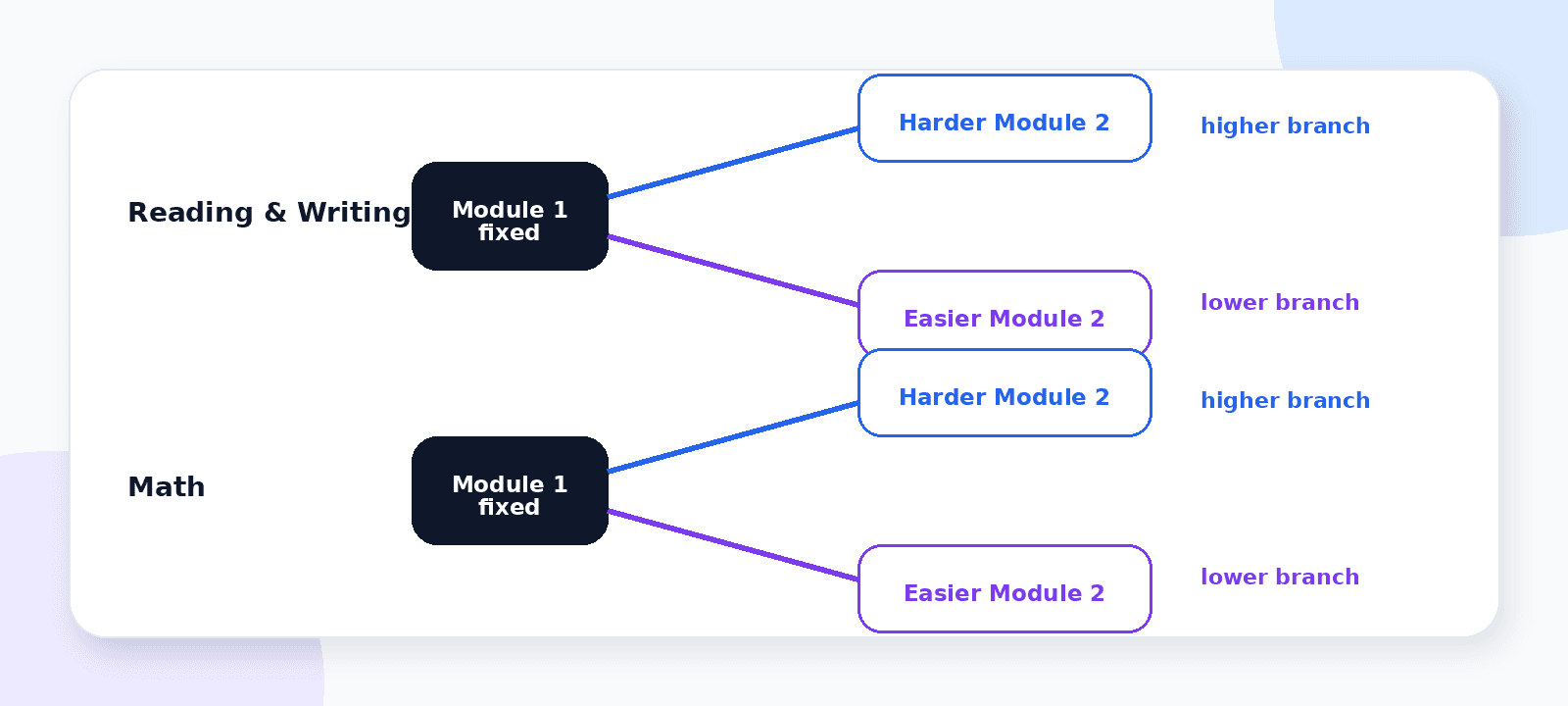
Each section, Reading and Writing and Math, is delivered in two parts. Module 1 contains a fixed mix of easy, medium, and hard questions that every test taker sees. Module 2 then arrives at one of two difficulty levels, chosen by your Module 1 performance.
Routing to the harder Module 2 gives you access to the highest scores in that section. Routing to the easier Module 2 places a lower cap on your possible score for that section. The two sections route independently, so you might get the harder Math module and the easier Reading and Writing module, or any combination.
| Stage | What happens |
|---|---|
| Module 1 (both sections) | Same fixed mix for everyone; sets your routing |
| Strong Module 1 | Routed to harder Module 2, higher score ceiling |
| Weaker Module 1 | Routed to easier Module 2, lower score ceiling |
| Across modules | You cannot return to Module 1 after submitting it |
Why Module 1 is the highest-leverage part of the test
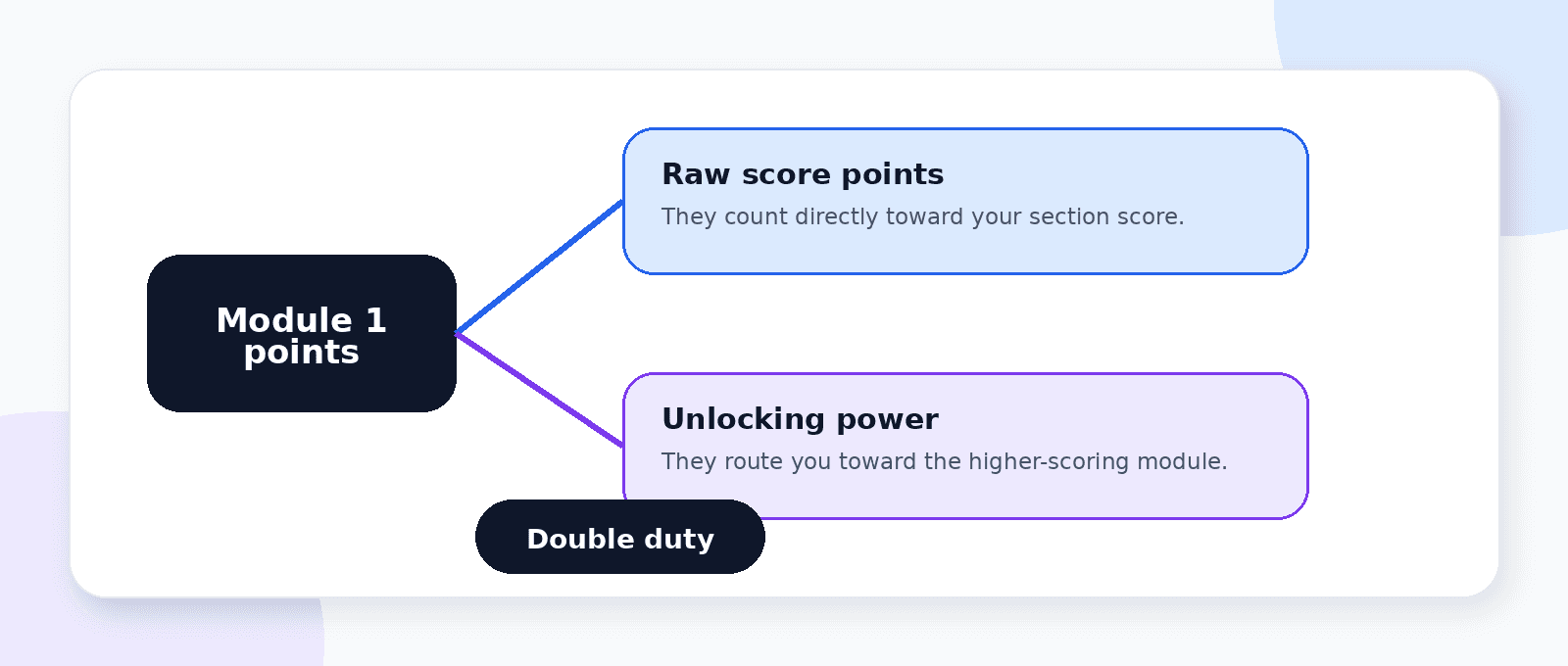
Because Module 1 determines which scoring tier you can reach, it is the most important stretch of each section. Points you secure early do double duty: they count toward your raw score and they unlock the harder module where the top scores live.
The practical takeaway is to treat the first module of each section with full focus and good pacing, rather than rushing it to save time for later. You cannot make up a missed routing opportunity in Module 2.
What this means for how you prepare
Adaptive testing rewards consistency under time pressure across the whole ability range, since Module 1 mixes easy, medium, and hard questions. Practicing only easy questions leaves you unprepared for the hard items that influence routing, and drilling only hard questions can cost you the easy points the test expects you to get.
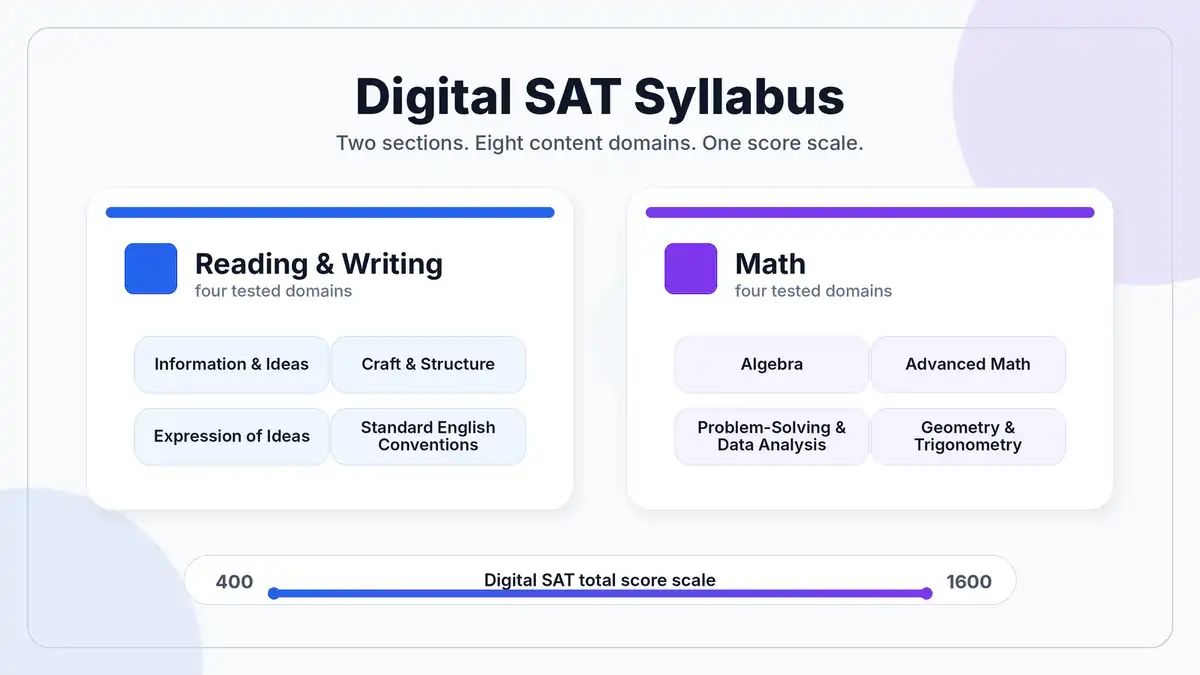
The most efficient preparation targets your weakest content domains so your Module 1 performance improves where it is currently leaking points. To find those domains, start from the Digital SAT syllabus, and to see how routing feeds the final number, read how the Digital SAT is scored. At Prism Learning, practice tests mirror the adaptive structure so you train under the same routing pressure you will face on test day.
Frequently asked questions about Digital SAT adaptive testing
Q: Is the Digital SAT adaptive question by question? A: No. It is section-adaptive, also called multistage adaptive. It adjusts once between the two modules of each section, based on your first-module performance, not after each individual question.
Q: Can I go back and change answers? A: Yes, within the module you are currently working on. Once you submit a module, you cannot return to it or change those answers.
Q: Does the harder second module really raise my score? A: Yes. The harder Module 2 carries access to the highest scores in that section. If you are routed to the easier Module 2, your ceiling for that section is lower.
Q: Do both sections adapt the same way? A: Each section adapts independently. Your Math routing and your Reading and Writing routing are decided separately by your performance on each section's first module.
Q: How should adaptive testing change my prep? A: Prioritize a strong, well-paced first module in each section, and prepare across the full difficulty range rather than only easy or only hard questions, since Module 1 mixes all levels.
Put this into practice with PRiSM Learning: PRiSM's adaptive practice tests.